Common Diameters and Grades Used for Reobar on Site
This guide explains the typical sizes and grades they will see on Australian sites, how they are specified, and how crews usually handle them in practice.
What do “diameters” mean when specifying reobar on site?
Diameters refer to the nominal thickness of the reinforcing bar in millimetres. On Australian drawings, they will usually see this as “N12”, “N16”, or “N20”, where the number is the diameter.
When people talk about common diameters and grades used for reobar on site, they are usually referring to these standard metric bar sizes and their matching steel grade.
Which reobar diameters are most common on Australian sites?
The most common diameters they will see are N12, N16, N20, N24, N28, N32, and sometimes N40 on heavy civil or major infrastructure. Smaller bars like N10 also appear, especially in slabs, footpaths, and residential work.
In general, common diameters and grades used for reobar on site skew toward N12 and N16 for lighter members and N20 to N32 for beams, columns, pile cages, and heavily loaded slabs.
Where is N12 reobar typically used on site?
N12 is widely used for residential slabs, footings, small beams, trench mesh substitute bars, and general-purpose reinforcing where spacing and cover control cracking. They will also see N12 in ligatures, starters, and secondary steel.
Because it is easy to cut, bend, and tie, N12 remains a staple in common diameters and grades used for reobar on site across metro builds from Sydney to Perth.
Where is N16 reobar typically used on site?
N16 is common in suspended slabs, strip footings, ground beams, and mid-sized columns and beams. It is often used where the design needs more steel area than N12 but still wants manageable bar handling.
On many commercial projects, common diameters and grades used for reobar on site include significant volumes of N16 because it balances strength, congestion, and labour.
Where is N20 reobar typically used on site?
N20 frequently shows up in transfer beams, heavily loaded slabs, core walls, large footings, and pile caps. It is also common as main bars in beam cages where anchorage lengths and laps are easier to manage than with bigger diameters.
When a job steps up in scale, common diameters and grades used for reobar on site often shift toward N20 as the “workhorse” main bar.
When do N24, N28, and N32 become common on site?
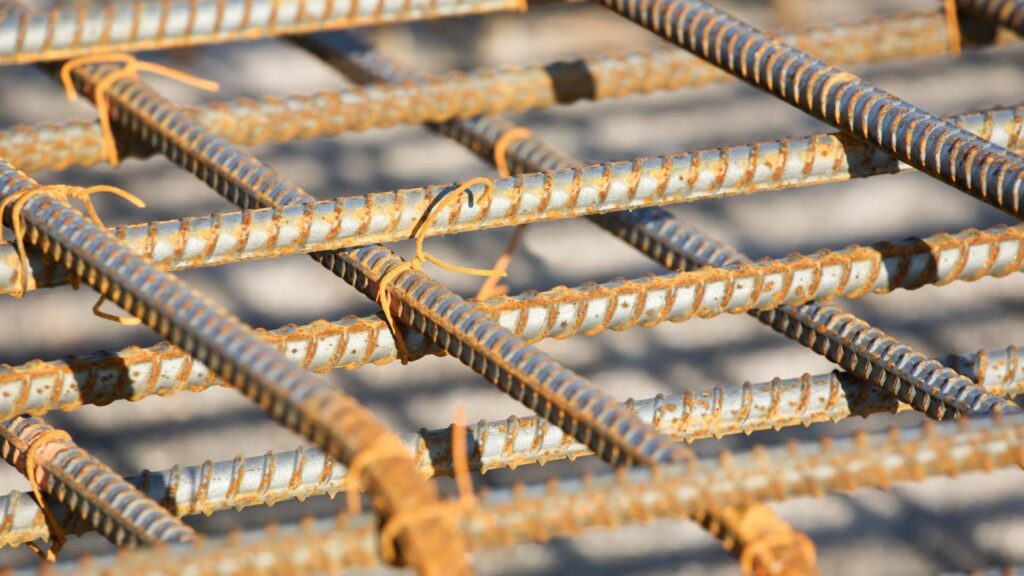
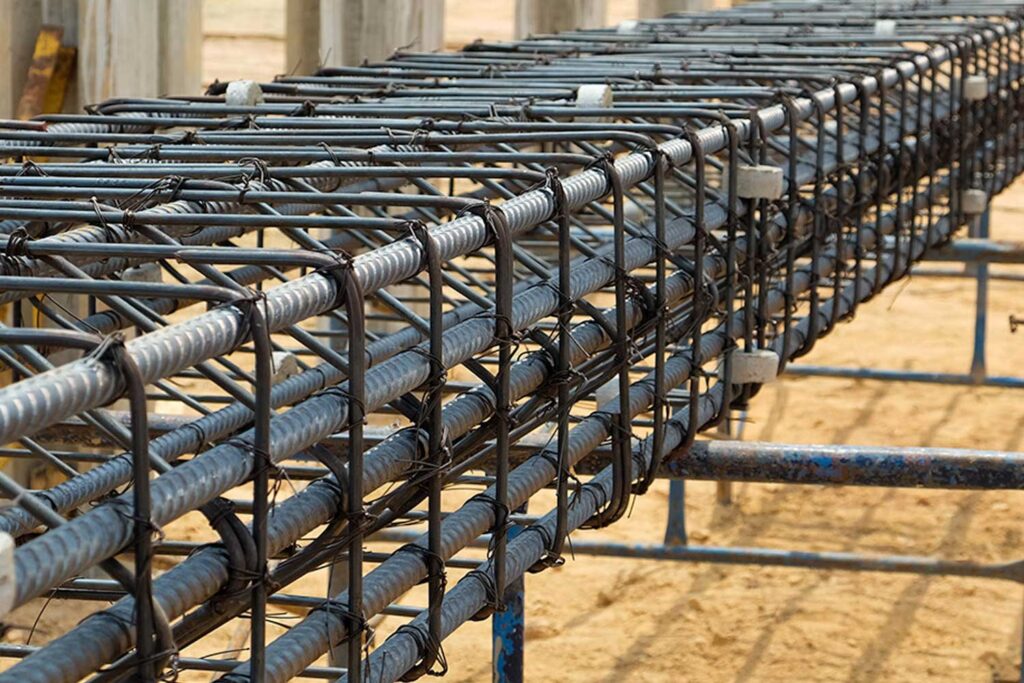
N24, N28, and N32 become common when members get thicker and loads increase, such as basement retaining walls, major columns, bridge elements, wharf structures, and large pile cages. They will often be used to reduce bar counts and congestion versus many smaller bars.
For heavy construction, common diameters and grades used for reobar on site often include N28 and N32 delivered as long straight lengths for cage assembly.
Is N40 reobar used often in Australia?
N40 is not common on everyday commercial building sites, but they may see it on infrastructure and heavy civil works. It is used when designers want high steel area with fewer bars, especially in deep beams, major foundations, and large-diameter piles.
Even though it is less frequent, it still sits within the broader set of common diameters and grades used for reobar on site on large projects.
What do the “N” and “R” bar designations mean?
On Australian documentation, “N” typically refers to deformed reinforcing bar used for structural purposes. “R” often refers to plain round bars, which are more common in ligatures, chairs, dowels, or specific detailing where bond is not relied on the same way.
Because most primary reinforcement uses deformed bars, common diameters and grades used for reobar on site are usually discussed in terms of N-bars rather than R-bars.
What grades of reobar are most common on Australian sites?
In Australia, they will most commonly encounter Grade 500 reinforcement for deformed bars, often shown as D500N or similar depending on supplier and documentation conventions. Lower grades exist, but typical modern structural work favours 500 MPa-class reinforcing for efficiency.
So when teams ask about common diameters and grades used for reobar on site, “500 grade N-bars” is usually the core answer.
How are grades shown on drawings and schedules?
Grades may be shown in a bar schedule, general notes, or specifications, sometimes referencing the applicable Australian Standard requirements. They may see callouts like “N16-200” for diameter and spacing, with grade stated elsewhere, or grade embedded in the product designation.
On well-documented jobs, common diameters and grades used for reobar on site are confirmed in three places: structural notes, the bar schedule, and the reinforcement supplier’s tags.
Why does Grade 500 dominate general construction?
Grade 500 reinforcement allows designers to achieve the required structural capacity using less steel area than lower-strength grades. This can help reduce reinforcement congestion in beams and columns, making concrete placement easier while also reducing handling and fixing time on site.
For most urban building projects, common diameters and grades used for reobar on site end up being Grade 500 because it is widely available and aligns with typical engineering design assumptions.
Are there situations where different grades are specified?
Yes. They may see different grades or ductility classes for seismic detailing, special structural elements, or compatibility with proprietary couplers and systems. Some projects also specify particular product certifications or supplier approvals.
Even then, common diameters and grades used for reobar on site remain consistent in diameter, while grade requirements become the variable that procurement and QA must control.
How do bar size and grade affect lap lengths on site?
Lap lengths depend on factors such as bar diameter, concrete strength, cover, confinement, and applicable detailing requirements. Larger-diameter bars generally require longer laps, while higher-strength steel may still need significant development lengths because reinforcement lap length is influenced by bond performance between the steel and surrounding concrete.
This matters in practice because common diameters and grades used for reobar on site influence congestion at laps, which can affect vibration, honeycombing risk, and inspection outcomes.
How do they choose between more smaller bars and fewer larger bars?
Designers and detailers balance steel area, spacing rules, crack control, constructability, and congestion. More smaller bars can distribute steel and help crack control, but it increases tying time. Fewer larger bars can reduce ties but may cause spacing issues and make concrete placement harder.
That trade-off is a daily reality behind common diameters and grades used for reobar on site, especially in beam-column joints and thick rafts.
What is the difference between bars, mesh, and trench mesh on site?
Bars are individual lengths used to build cages and detailed reinforcement layouts. Mesh is prefabricated sheets used commonly in slabs and pavements. Trench mesh is narrower mesh designed for strip footings and beams.
Many sites use a mix, but common diameters and grades used for reobar on site usually refers to individual N-bars, while mesh is specified by sheet type rather than a single bar diameter.
What should they check on delivery to confirm diameter and grade?
They should check the bar tags, bundle labels, heat numbers, and any supplier documentation requested by the project spec. They should also confirm bar marks match the bar schedule, including cut lengths, shapes, and quantities.
When project teams lock down common diameters and grades used for reobar on site, delivery checks are where mistakes are caught before steel is installed and poured in.
What are the most common site issues with the wrong diameters or grades?
The most common issues are substituted diameters due to stock shortages, mixed bundles in the laydown area, missing tags, and cutting bars before verification. Another common problem is installers using a bar that “looks right” rather than matching the bar mark.
Because of these habits, common diameters and grades used for reobar on site should be controlled by marking systems, QA sign-offs, and keeping tags until steel is fixed and inspected.
How do they manage bar bending and cutting for common diameters?
Most N12 to N20 bars are routinely cut and bent on site or supplied pre-bent by a rebar fabricator. Larger bars like N28 and above are more likely to be pre-bent to reduce manual effort and ensure accuracy, although it depends on site equipment.
This workflow shapes common diameters and grades used for reobar on site, because the “common” sizes are often the ones that crews can handle efficiently with available tools.
What is the practical takeaway for common bar sizes and grades?
On typical Australian projects, they will repeatedly see N12, N16, and N20 as the core diameters, with N24 to N32 appearing as the structure scales up. Grade 500 is the default in most modern specifications, with project-specific variations managed through documentation and QA.
If they want fewer surprises on pours, they should treat common diameters and grades used for reobar on site as a verification process, not a guess, and confirm size, spacing, and grade before concrete arrives.
FAQs (Frequently Asked Questions)
What do the diameters like N12, N16, and N20 mean when specifying rebar on Australian construction sites?
Diameters refer to the nominal thickness of reinforcing bars, measured in millimetres. On Australian construction drawings, designations such as N12, N16, and N20 identify the bar diameter, making it easier to specify the required reo bar for different structural applications. These standard metric sizes are widely used across Australian construction projects and are available in specific steel grades suited to reinforced concrete construction.
Which rebar diameters are most commonly used on Australian construction sites?
The most common rebar diameters on Australian sites include N12, N16, N20, N24, N28, and N32. Smaller bars like N10 are also seen in slabs and residential work. Generally, lighter members use N12 and N16 bars while heavier structural elements like beams and columns require larger diameters from N20 upwards.
Where is N12 rebar typically applied on site?
N12 rebar is widely used for residential slabs, footings, small beams, trench mesh substitutes, ligatures, starters, and secondary steel. Its ease of cutting, bending, and tying makes it a staple for general-purpose reinforcing across metropolitan builds in Australia.
What are the common applications for N16 and N20 rebar on Australian sites?
N16 bars are frequently used in suspended slabs, strip footings, ground beams, and mid-sized columns where more steel area than N12 is needed but manageable handling is desired. N20 bars serve as ‘workhorse’ main bars in transfer beams, heavily loaded slabs, core walls, large footings, and pile caps due to their balance of strength and ease of anchorage management.
When do larger diameters like N24, N28, and N32 become necessary on site?
Larger diameters such as N24, N28, and N32 become common when structural members grow thicker or loads increase—examples include basement retaining walls, major columns, bridge elements, wharf structures, and large pile cages. Using these sizes helps reduce bar congestion by decreasing the number of bars needed.
What grades of rebar are most commonly specified in Australian construction projects?
Grade 500 reinforcement (often labeled D500N) dominates Australian construction due to its high strength-to-area efficiency. This grade reduces congestion within concrete members and improves handling for fixers. While other grades exist for specialized requirements like seismic detailing or proprietary systems, Grade 500 remains the standard for typical urban building projects.